

Rediscovering Japanese Handcraft Vol. 1
A Wish Stitched into Every Thread — The Story of Kaga Yubinuki
Japan has long been home to a rich tapestry of traditional handcrafts, sustained by regional tools and the exquisite skills of artisans. In this series, we explore the stories behind these uniquely Japanese traditions—things you may know by name, but rarely in depth—and rediscover how they can bring joy to modern everyday life.
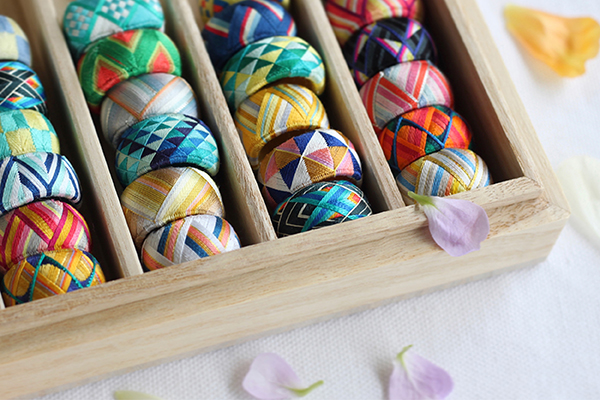
In our first issue, we share the little-known story of the "Kaga Yubinuki" (thimble). Small enough to fit in the palm of your hand, this traditional craft is admired for its jewel-like beauty.
Discovering the Unexpected: The Origins of a Tradition
The history of Kaga Yubinuki dates back to the mid-1600s in Kanazawa, during the Edo period. It began with women who worked as kimono seamstresses. To make the most of leftover silk threads—a precious luxury at the time—they began crafting their own thimbles by hand.
At that time, silk thread was a precious material reserved for crafting fine kimono, including the exquisite Kaga Yuzen textiles for which the region was renowned. Considered a luxury material used for garments made for samurai families and wealthy merchants, it was not something ordinary seamstresses could freely afford to use.
Instead of discarding even the smallest leftover strands, they carefully gathered and treasured them, transforming what remained into beautiful and practical tools of their own. This spirit of cherishing every material and giving it new life continues to resonate with today's ideas of sustainable craftsmanship.
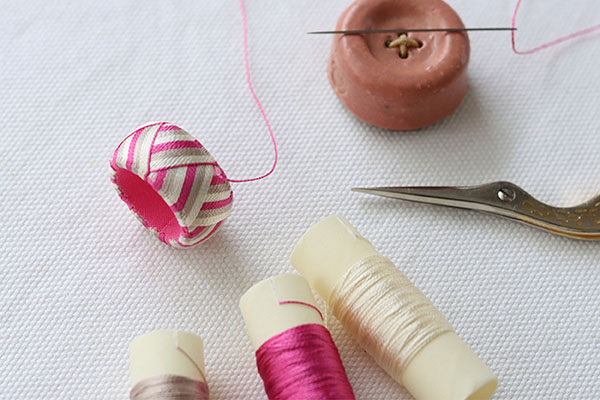
What is truly surprising is the core of the thimble. The base is made simply from thick paper, silk floss, and fabric scraps. By repurposing worn-out kimonos and other fabric scraps, and layering them with vibrant silk threads, these women transformed humble materials into tools that combined practicality with breathtaking beauty.
Wisdom and Wishes Woven into Every Pattern
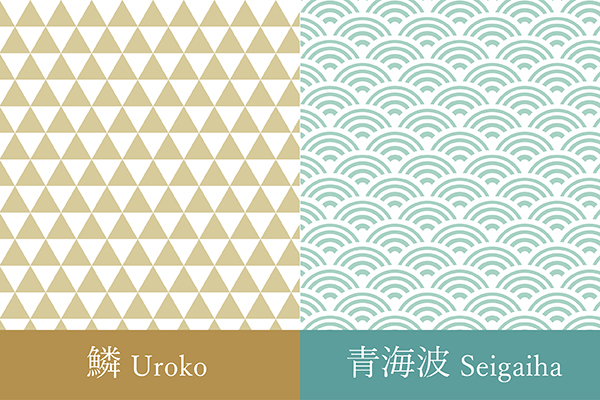
The intricate geometric patterns that decorate Kaga Yubinuki are far more than simple ornamentation. Traditional designs such as Uroko (scales) and Seigaiha (waves of the open sea) carry symbolic meanings that have been cherished in Japan for generations, representing protection from misfortune, family well-being, and enduring happiness.
Bringing History into Modern Life
Once an indispensable tool for sewing, the Kaga Yubinuki has found new life beyond its original purpose. Today, its beauty is appreciated in many different ways.
Some wear it as a pendant, threading it onto a leather cord. Others display it among seasonal decorations or keep it close as a personal token of good fortune. It can also be enjoyed as a decorative object, displayed alongside Cohana’s Tombo-Dama Sewing Pins or Awaji Kawara Needle Rest to add a touch of color and craftsmanship to a desk or workspace.
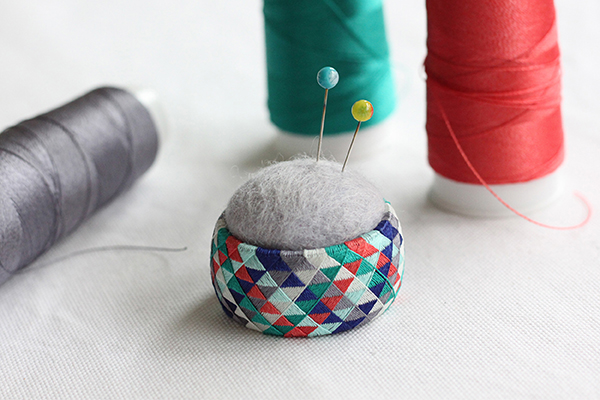
Though its role has evolved over time, the spirit embodied in every carefully stitched thread—a love of handcraft and the joy of making—continues to quietly enrich our lives today.
Want to Learn More? Meet a Contemporary Maker
Among those carrying the tradition of Kaga Yubinuki forward today is Nozomi Shichi.
In our interview series, Cohana and Ninigi, we spotlight people who lead rich and fulfilling creative lives through handcraft. As a companion to this story, we invite you to revisit our interview with Nozomi Shichi to explore her journey and unique perspective on this timeless craft.
This interview was originally published in May 2024.
May today's handcraft bring a little more inspiration and joy to your day.