

Story of Cohana’s 5 Basic Colors: TSUYUKUSAIRO
Japan has more than 460 traditional colors, each named after the landscapes and natural beauty of the changing seasons.
From this rich palette, Cohana carefully selected five signature colors inspired by the beauty, culture, and aesthetic sensibilities of Japan.
For our products, we use simple color names such as Yellow, Pink, Green, Blue, and Gray. Each of these colors is inspired by a traditional Japanese color with its own unique name and story.
Discover the story of TSUYUKUSA, one of Cohana's five signature colors, along with a selection of items in this beautiful shade.
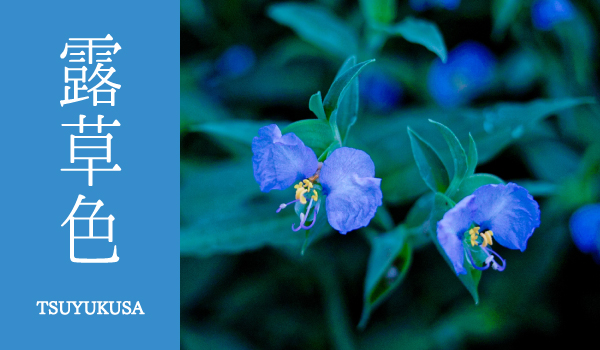
TSUYUKUSA takes its name from the blue Asiatic dayflower, a small blue wildflower that blooms gently in the early morning dew. In Japanese, “露 (Tsuyu)” means dew, “草 (Kusa)” means grass, and “色 (Iro)” means color. The flower is said to have been named for the way it blooms in the morning dew and fades within a single day.
In Japan, Tsuyukusa has long been used as a blue dye.
For over 1,300 years, dating back to the Manyo era, Japanese artisans have extracted this precious blue by crushing the flowers and leaves, making it one of Japan's most ancient dyeing traditions.
This blue dye has a water-soluble nature and fades easily. Because of this nature, the word “Tsuyukusa” became a symbol of transience and fleeting beauty in classical Japanese poetry.
Taking advantage of its water-soluble nature, from the mid-Edo period onward, the dye from Tsuyukusa began to be used for preliminary sketches in Yuzen dyeing, contributing to the development of Japanese arts and crafts.
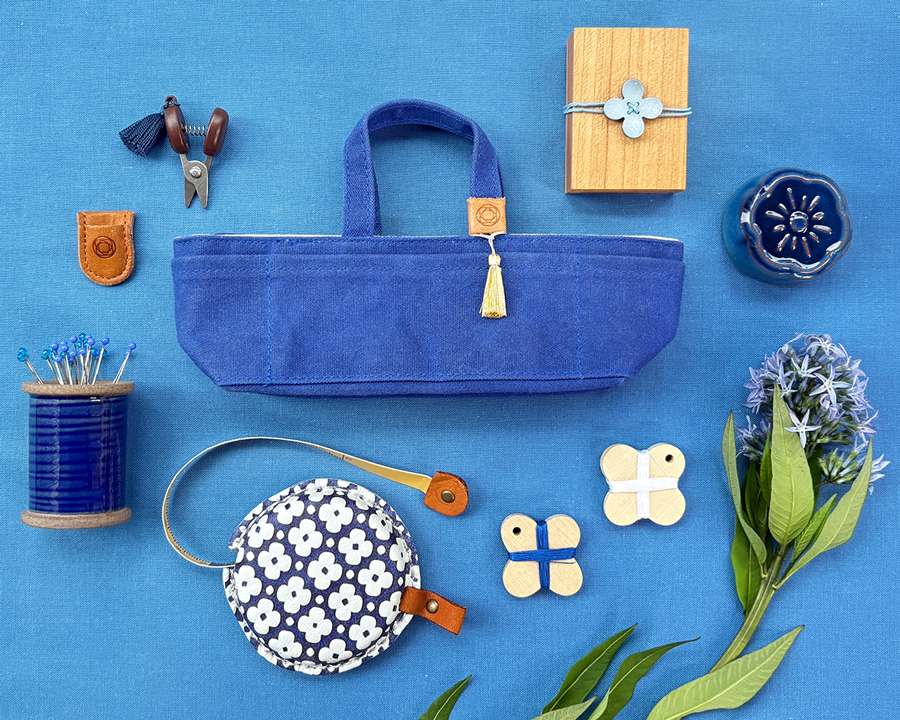
Tools in TSUYUKUSA tools bring a refreshing sense of calm to your handwork time. We hope this gentle blue shade will bring peace and quiet inspiration to every creative moment.
Explore the stories behind the other four colors.